Addressing an important but often overlooked area of health
Menopause remains an under-recognized issue within many health systems despite its significant implications for physical, emotional, mental and social well-being. WHO recognizes menopause as an important life-course transition that requires appropriate health-system responses, policy attention, provider capacity-building and access to quality information and services. Global WHO data shows that menopause is experienced by approximately 51% of the global population and is one of the most under-recognized and under-supported phases of women’s health globally. Most women experience menopause between the ages of 45 and 55 years, and many spend more than one-third of their lives in the post-menopausal period.
At the same time, WHO emphasizes that sexual health is a state of physical emotional, mental and social well-being in relation to sexuality and remains relevant throughout life. However, sexual and reproductive health needs of older persons often receive limited attention in policies, programmes and health services. Ageism, stigma and misconceptions surrounding sexuality in later life can create barriers to seeking care and accessing information and support.
Recognizing these challenges, the Directorate for Youth, Elderly and Disabled Persons (YED) of the Ministry of Health and Mass Media, with technical support from the World Health Organization, convened a policy dialogue and advocacy programme on “Addressing Menopause-related Issues, including Sexual Health, among Older Persons and People Living with Disability” on 4 September 2026 in Colombo. The programme brought together Ministry of Health officials, consultants in geriatric medicine, clinicians, public health professionals, academics and development partners to discuss policy priorities and strengthen national responses to menopause-related health concerns and sexual and reproductive health among older persons.
The event provided a platform to discuss menopause-related health concerns, including sexual well-being, mental health, urogenital symptoms and healthy ageing, while highlighting the need for more inclusive and person-centred approaches to care.
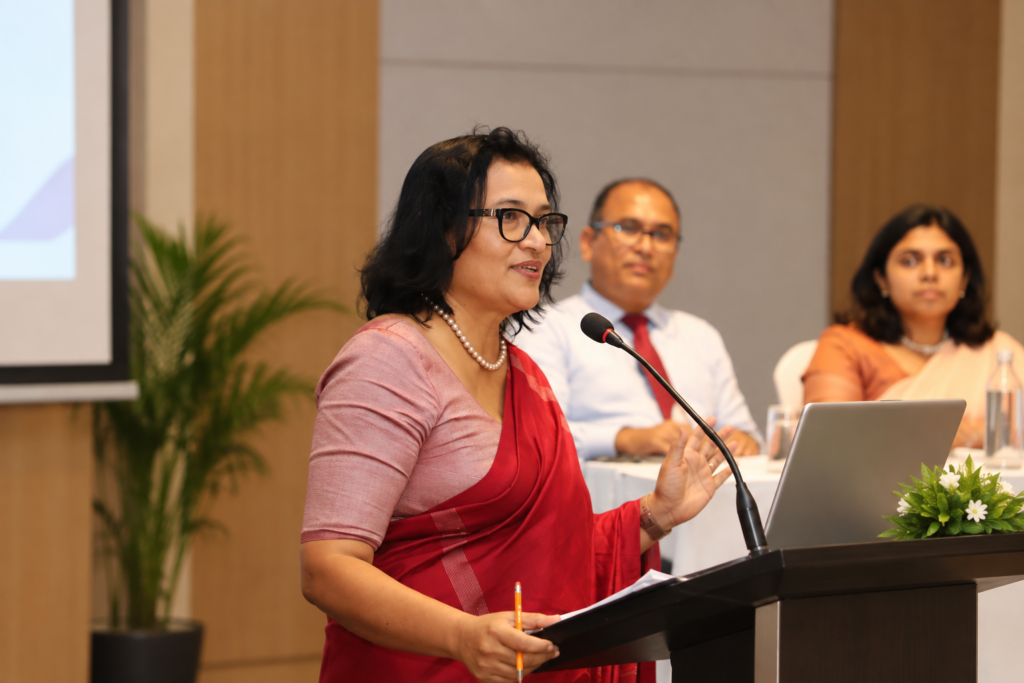
Dr Shiromi Maduwage, Consultant Community Physician, Directorate of Youth, Elderly and Disabled Persons from the Ministry of Health, moderating the menopause panel discussion.
Opening the programme, officials highlighted Sri Lanka’s demographic transition and the importance of preparing health systems to respond to the evolving needs of a rapidly growing older population. Discussions emphasized that healthy ageing is not simply about adding years to life, but about enabling older persons to maintain health, dignity, participation and quality of life throughout their lives.
Dr Rajesh Sambhajirao Pandav, WHO Representative to Sri Lanka, emphasized:
“As populations age, we must recognize that sexual and reproductive health is not limited to the reproductive years. Older persons, including women experiencing menopause and people living with disabilities, have the right to information, quality health services, dignity and well-being. Addressing these needs is a critical component of healthy ageing and ensuring that no one is left behind.”
Promoting a life-course and rights-based approach to sexual and reproductive health
A key focus of the policy dialogue was the need to adopt a life-course approach to sexual and reproductive health. Participants discussed how sexual and reproductive health is often incorrectly viewed as relevant only to adolescents and people of reproductive age. However, sexual health remains an important component of health and well-being throughout life and includes issues related to intimacy, relationships, bodily autonomy, access to information and respectful healthcare services.
WHO contributed technical perspectives on healthy ageing, menopause and sexual health in later life, highlighting that older persons retain the same rights to health, information, dignity and non-discrimination as all other population groups. Participants explored how ageism, stigma and misconceptions can prevent older women and men from seeking care and can result in their needs being overlooked within policies and health services.

Dr Yasara Samarakoon, National Professional Officer – Family Health, Gender and Life Course at WHO Sri Lanka, providing technical insights on menopause and healthy ageing from WHO’s perspective.
Ensuring inclusion of people living with disabilities
The dialogue also emphasized the importance of disability inclusion. Older persons living with disabilities may face additional barriers to accessing sexual and reproductive health information and services, including physical, communication and social barriers. Discussions highlighted the need for age-friendly, accessible and person-centred services that respond to the diverse needs of older persons and uphold the principles of equity and inclusion.
Participants underscored that people living with disabilities have the same sexual and reproductive health needs and rights as others and should be explicitly included within health policies, guidance and services.
Strengthening healthy ageing efforts in Sri Lanka
According to WHO’s Healthy Ageing facts and figures for Sri Lanka, approximately 17% of the population was aged 60 years and above in 2024, and this proportion is projected to rise to 26% by 2050, highlighting the need for policies and health services that respond to the evolving needs of older persons. Women constitute the majority of the older population, reflecting their longer life expectancy.
This menopause dialogue is part of broader WHO support to Sri Lanka on healthy ageing, including the development of a multisectoral action plan on healthy ageing, policy dialogues on menopause and sexual and reproductive health, and initiatives to strengthen integrated, person-centred care for older persons. These efforts are aligned with the UN Decade of Healthy Ageing 2021–2030 and the Colombo Declaration on Healthy Ageing through strengthened primary health care, which calls for rights-based, person-centred, gender-sensitive and age-friendly approaches to health and care.
The dialogue concluded with a shared commitment to strengthen awareness, build provider capacity, identify policy gaps and advance evidence-informed recommendations to improve services for older persons, including women experiencing menopause and people living with disabilities.
The key speakers/panelists of the menopause dialogue, including senior officials from the Ministry of Health, Family Health Bureau, Menopause Society of Sri Lanka and WHO Sri Lanka.
WHO remains committed to supporting Sri Lanka in advancing healthy ageing, promoting equitable access to sexual and reproductive health services, and ensuring that older persons can enjoy healthy, dignified and fulfilling lives.





